
Emergency Roofing Cost Guide
Emergency Roof Repair Cost
Estimate urgent roof repair costs for active leaks, storm damage, tarping, after-hours response, and temporary roof protection.
Emergency leak repair
$250 – $1,500
Common for active leaks around vents, flashing, roof valleys, missing shingles, or storm-opened areas.
Emergency roof tarping
$200 – $1,000
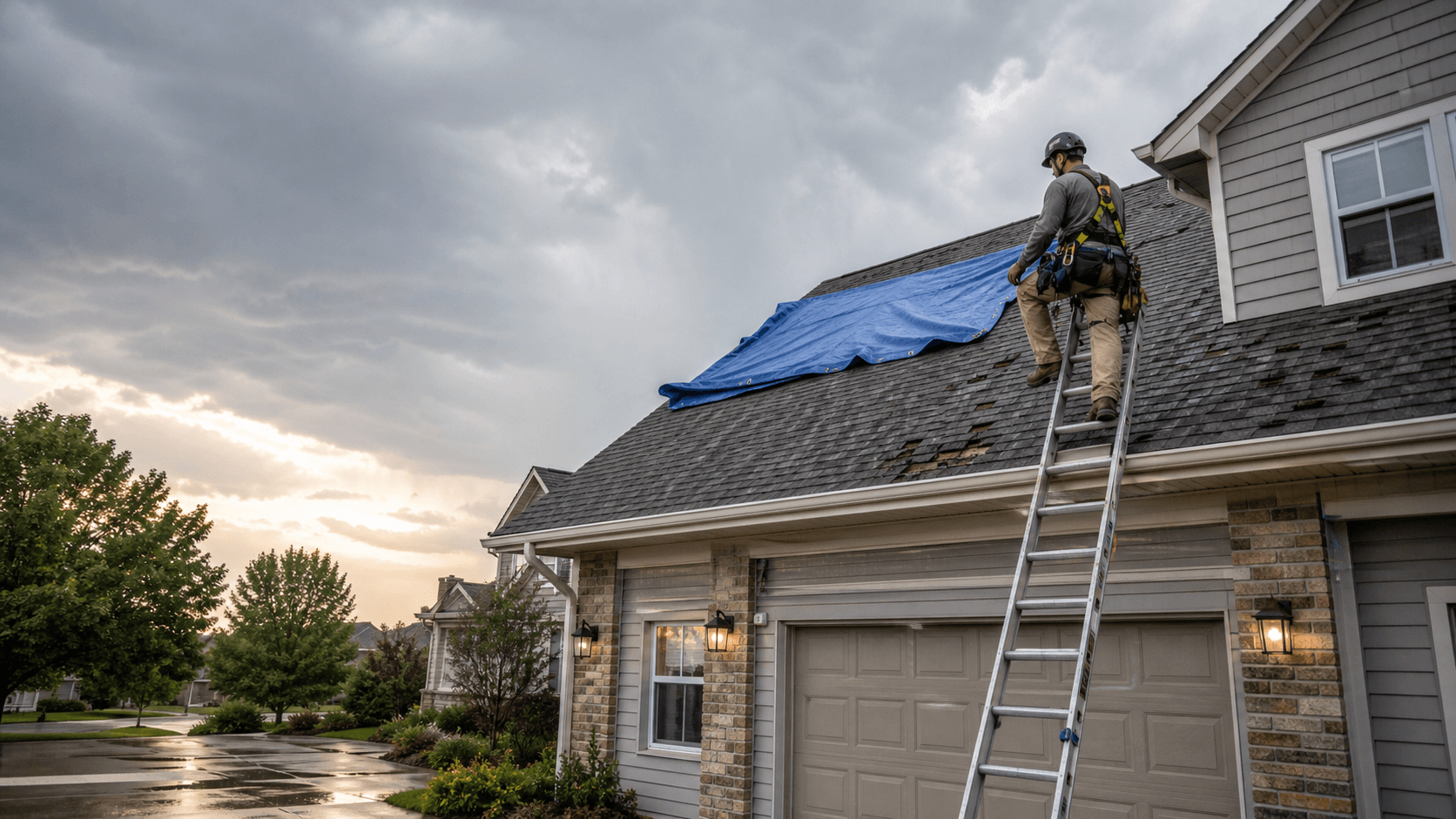
Temporary protection used to reduce water intrusion until permanent repairs can be completed.
Storm damage temporary repair
$300 – $2,000+
Applies when wind, hail, debris, or fallen branches create larger openings or multiple damaged areas.
After-hours service
Extra fee may apply
Evening, weekend, holiday, or urgent response calls may increase the final service price.
When roof damage becomes urgent
Not every roof issue is an emergency. The most urgent situations involve active water intrusion, storm-created openings, exposed roof decking, or conditions that could quickly create interior damage.
Water actively entering the home
Ceiling stains spreading quickly
Missing shingles after heavy wind
Exposed roof decking or underlayment
Tree limb or debris impact damage
Water in attic insulation or drywall
Keep Researching
Related Roofing Guides
Compare costs, damage signs, materials, and next steps before requesting estimates.
Temporary vs permanent repair
Emergency work may focus on stopping water first. Permanent repairs may require a later inspection, material matching, decking review, or replacement planning.
Document damage
Take photos of ceiling stains, attic moisture, missing shingles, fallen branches, hail, gutters, and visible exterior damage before cleanup when safe.
Insurance considerations
If damage came from wind, hail, or debris, emergency mitigation may be part of the insurance conversation. Review your policy and save receipts.
Emergency roof repair FAQ
How much does emergency roof repair cost?
Emergency roof repair commonly ranges from a few hundred dollars for small leak control or tarping to several thousand dollars when storm damage, multiple leak points, access issues, or after-hours work are involved.
How much does roof tarping cost?
Emergency roof tarping often ranges from about $200 to $1,000 depending on roof size, height, pitch, access, storm conditions, and how much area needs temporary protection.
Is emergency roof repair permanent?
Sometimes, but not always. Emergency work often stops active water intrusion first. A permanent repair or replacement may be scheduled after the roof is safely inspected.
Will insurance cover emergency roof repair?
Insurance may help when the damage is caused by a covered event such as wind, hail, or fallen debris. Document the damage, save invoices, and review your policy before assuming coverage.
Should I climb on the roof during an emergency?
No. Avoid climbing on a wet, storm-damaged, or unstable roof. Document visible damage from the ground and focus on reducing interior water damage safely.
Partner resource
Compare local roofing professionals
Roof repair and emergency roof work can vary widely by contractor. If you want additional options, compare local roofing pros.
Affiliate disclosure: Eph Labs may earn a commission if you click a partner link and complete a qualifying action, at no additional cost to you.
Angi
Find Local Roofing Contractors
Compare local roofing professionals for roof repair, roof replacement, storm damage, and emergency roofing projects.
Find Roofing ContractorsNext Step
Request emergency roof help
Return to the urgent request form, or use the calculator for non-emergency repair and replacement planning.