
Hail Damage Signs
Hail Damage Signs on Your Roof
Learn how to identify hail damage and what to do next.
Hail Damage Signs
Common hail damage signs
Look for visible clues after hail, wind, or severe storms.
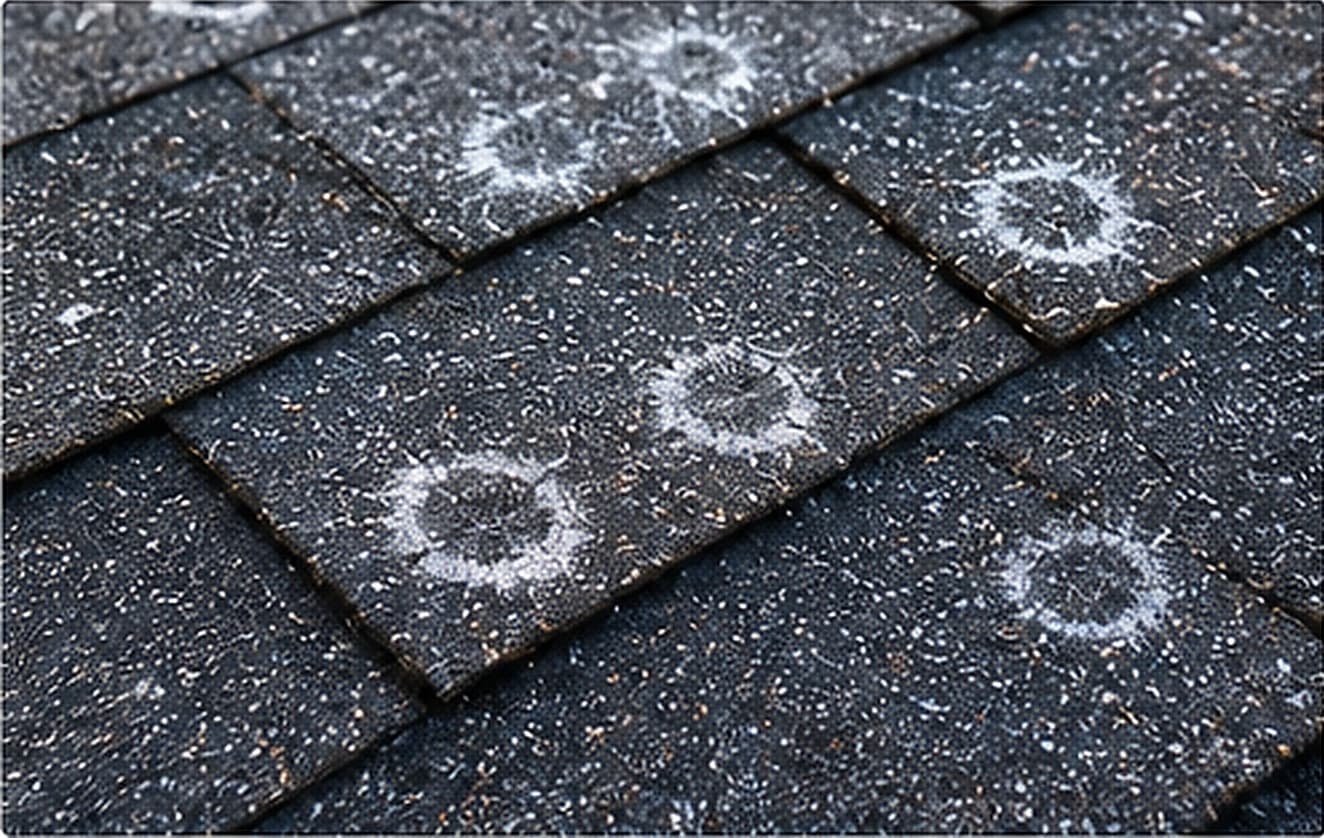
Missing Granules
Hail can knock protective granules off asphalt shingles and expose darker areas.
Dented Flashing
Metal flashing, vents, gutters, and caps may show visible dents after hail impact.
Cracked Shingles
Large hail can crack, bruise, or weaken shingles, increasing future leak risk.
Water Intrusion
Damage may not leak immediately, but weakened areas can let water in later.
Hail Damage Signs
What to check after a storm
Document visible issues safely before requesting an inspection.
Inspect From Ground
Avoid climbing. Look for missing shingles, dented gutters, or debris.
Take Photos
Document dents, roof debris, water stains, and visible damage.
Review Insurance
Check your policy and deductible before filing a claim.
Schedule Inspection
A qualified roofer can inspect shingles, vents, valleys, and flashing.
Plan Next Steps
Compare this guide with cost, insurance, and material resources
Before choosing a scope, review the roofing hub, roof replacement calculator, repair vs replacement guide, roof insurance claim guide, and material cost guide.
Hail Damage Signs on Your Roof FAQ
Can hail damage a roof without causing leaks?
Yes. Hail can weaken shingles or remove granules without an immediate leak.
How soon should hail damage be repaired?
Visible hail damage should be inspected quickly because small problems can worsen over time.
Will insurance cover hail damage?
Insurance may cover sudden hail damage depending on your policy, deductible, roof age, and inspection findings.
Keep Researching
Related Roofing Guides
Compare costs, damage signs, materials, and next steps before requesting estimates.
Next Step
Get help with your roofing project
Use the calculator for a planning range, or return to the estimate form to share the project details.